
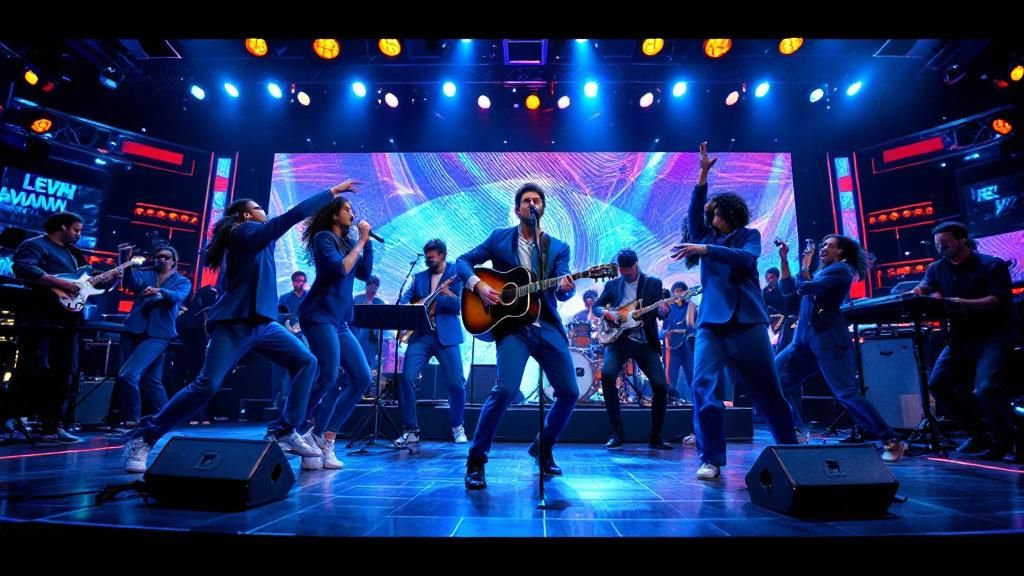
David Byrne delivered vibrant theatricality to The Late Show on 31 March, presenting a compelling rendition of “When We Are Singing” featuring Stephen Colbert. The Talking Heads frontman, joined by a ensemble of blue-clad musicians and dancers, showcased the complete dance concept that has become his trademark. The track comes from his latest album, Who Is the Sky?, released in September 2025. During his appearance, Byrne discussed his deliberate shift towards colourful, visually dynamic shows and described his strategy to combining solo material with iconic Talking Heads songs on his current tour, featuring “Psycho Killer” and “Life During Wartime,” whilst maintaining artistic integrity.
A Dramatic Come Back to Late Evening Television
Byrne’s performance on The Late Show represented a striking presentation of his emerging artistic perspective, one that emphasises visual grandeur and dance accuracy. The interpretation of “When We Are Singing” exemplified his inclination to tackle composition with humour and self-reflection, extracting comedy from the peculiar facial expressions singers inevitably adopt during performance. When discussing his compositional choices with Colbert, Byrne revealed an near-scientific fascination about the technicalities of vocal performance, noting how singers’ gaping mouths generate an indeterminate appearance that could indicate either profound pleasure or basic physiological requirement. This intellectual approach to performance art sets apart his work from standard popular entertainment.
The aesthetic transformation evident in Byrne’s current tour reflects a conscious abandonment of his former grey staging approach, a conscious choice rooted in modern cultural demands. He expressed a distinct philosophy: the times call for colour, vibrancy, and visual warmth rather than severe austerity. This change demonstrates Byrne’s sensitivity to the emotional landscape of his spectators and his acknowledgement that visual design conveys significance as compellingly as lyrics or melody. By partnering with his dressed ensemble, Byrne has established a integrated visual aesthetic that complements his musical inquiry whilst conveying an optimistic, forward-looking artistic stance.
- Byrne intentionally chose “When We Are Singing” to underscore absurdity of facial expressions
- Current tour showcases vibrant blue costumes substituting for earlier grey visual design
- Performance incorporates Talking Heads signature pieces alongside solo material from Who Is the Sky?
- ICE footage incorporated strategically at end of “Life During Wartime” for impact
The Creative Vision Behind Who Is the Sky?
David Byrne’s latest album, Who Is the Sky?, released in September, represents a extension of his lifelong investigation into human behaviour, perception, and artistic expression. The record functions as a creative wellspring for his current touring endeavour, with “When We Are Singing” demonstrating his capacity for draw deep insights from ordinary occurrences. Byrne’s method of songwriting remains distinctly intellectual, converting ordinary observations into compelling musical narratives. The album’s thematic concerns—how we present ourselves, what our expressions disclose or hide—shape every element of his stage shows, creating a cohesive artistic statement that extends beyond traditional album promotion into territory that is more philosophically ambitious.
The artistic fusion between the new material and Byrne’s reimagined concert visual approach produces a unified experience for audiences. Rather than approaching Who Is the Sky? as merely another body of work to be staged, Byrne integrates its thematic structure into the performance and movement dimensions of his productions. This holistic approach reflects his long-standing dedication to dissolving boundaries between music, dance, and visual art. By choosing particular pieces like “When We Are Singing” for elaborate theatrical treatment, Byrne illustrates how contemporary songwriting can move beyond the recording studio and become fully realised performance art on stage.
Transforming the Live Music Experience
Throughout his body of work, Byrne has repeatedly rejected the idea of fixed, invariable concert presentations. His approach prioritises continuous transformation and adaptation, treating each tour as an opportunity to reconsider how music should be experienced in performance. The shift from subdued staging to vibrant, colourful staging reflects this investment in artistic evolution. Rather than drawing from nostalgic appeal or established reputation, Byrne actively constructs fresh aesthetic vocabularies that support his present creative interests, ensuring that his shows remain current and deeply affecting rather than just revisiting the past.
Byrne’s partnership with his group of blue-dressed performers constitutes a intentional commitment to dance narrative. By working with skilled artists who grasp both movement and musical vocabularies, he creates layered performances where dance, costume, and music communicate simultaneously. This multidisciplinary approach sets apart his shows from traditional concert formats, framing them instead as immersive creative experiences. The integration of classic Talking Heads material alongside original compositions shows that reimagining need not involve abandoning one’s past—rather, it involves placing past work within new artistic contexts that honour their integrity whilst exploring fresh directions.
Reconciling Legacy and Innovation
David Byrne’s approach to his catalogue demonstrates a nuanced understanding of creative accountability. Rather than discounting his Talking Heads era or remaining solely identified with it, he has developed a philosophy that permits him to honour the past whilst preserving creative autonomy. This balance requires thoughtful selection—selecting which classic tracks merit featuring in contemporary sets, and how they should be situated within new artistic frameworks. Byrne’s willingness to perform “Psycho Killer” and “Life During Wartime” alongside solo material illustrates that legacy need not equate to stagnation or cynical nostalgia-chasing.
The risk Byrne highlights—becoming a “legacy act that delivers the old hits”—represents a genuine creative pitfall that many veteran performers face. By strategically restricting his reliance on earlier material and regularly rethinking production aesthetics, he preserves creative credibility whilst acknowledging his past. This strategy maintains both his creative principles and his audience’s engagement, making certain that concerts function as vital creative expressions rather than museum exhibitions. His resistance to committing to a full Talking Heads reunion additionally emphasises his dedication to artistic evolution over financial expedience.
Talking Heads Content in Current Times
When Byrne performs “Life During Wartime” today, the song holds distinctly contemporary resonance. By licensing ICE footage to enhance the track’s conclusion, he converts a 1979 post-punk piece into a reflection about current political circumstances. This editorial approach—showing the imagery only at the song’s end rather than from start to finish—demonstrates refined curatorial sensibility. The approach recognises the footage’s emotional impact whilst preventing the performance from becoming overwhelmingly bleak or didactic, maintaining the song’s artistic vision whilst strengthening its present-day importance.
This contextualisation strategy transcends simple visual support. Byrne’s choice to incorporate Talking Heads material within his active ensemble’s artistic framework generates meaningful exchange linking historical and contemporary elements. The dressed ensemble members and vibrant staging alter the way viewers encounter these recognisable tracks, removing sentimental assumptions and insisting upon conscious involvement with their contemporary meanings. Rather than preserving the songs in amber, this method permits them to evolve across novel artistic frameworks.
- Strategic inclusion of classic tracks avoids artistic stagnation and legacy-act status
- Reimagined visual presentation strengthens contemporary relevance without destroying artistic authenticity
- Refusing reunion allows Byrne to control how and when Talking Heads catalogue is presented
The Principles of Achievement
David Byrne’s approach to live performance goes well past simply performing music—it constitutes a carefully considered creative vision rooted in visual storytelling and audience behaviour. During his performance on The Late Show, he conveyed this outlook with typical consideration, outlining how apparently ordinary observations about human conduct shape his creative choices. His rendition of “When We Are Singing” illustrates this perspective: the song emerged from Byrne’s observation that singers’ open mouths during vocal performance create an ambiguous expression—one that could indicate either deep ecstasy or mere physiological need. This sardonic observation transforms into theatrical material, showing how Byrne draws from everyday life for artistic material.
This philosophical framework applies to his broader approach to touring and stage design. Rather than viewing concerts as unchanging displays of pre-recorded work, Byrne views each tour as an opportunity for total creative reinvention. His choice to incorporate the current tour with colour—a calculated contrast to the grey design approach of his earlier productions—reveals deeper beliefs about the social obligation of art. In his estimation, today’s audiences facing uncertain times require visual dynamism and chromatic richness. This is not simply a aesthetic decision; it reflects Byrne’s belief that live performance bears a duty to elevate and energise, to provide sensory and emotional nourishment beyond the music itself.
Why Colour Is Important Now
Byrne’s explicit statement—”the times we live in, we need some color”—demonstrates how he frames creative choices within broader social contexts. The shift from grey to vibrant blue-clad dancers and colourful staging underscores his conviction that visual aesthetics hold cultural and emotional significance. This choice acknowledges current concerns and doubts whilst offering an counterbalance through colour saturation. Rather than withdrawing towards monochromatic austerity, Byrne argues that artistic expression must fundamentally oppose despair through its chromatic vocabulary, transforming the concert stage into a space of deliberate, necessary colour.
